


Comanche Circle Data Center Opposition
Say No to Sailfish Data Center & NRG Power Tolar
- Home
- Comanche Circle Data Center Opposition
Our beautiful Paluxy Valley is being invaded!
A massive hyperscale data center and power plant will dramatically change the landscape forever, fueling the Comanche Circle Data Center opposition. The entire State of Texas cherishes this unique and special region that connects North Texas and the Hill Country.

Developer: Sailfish Investors, Ryan Hughes
Project: Comanche Circle Data Center
Size: 5GW Hyperscale AI Data Center on 2100 acres
5 campuses
32 buildings
905 acres
3.2GW
50 data centers, 500,000 sq ft each, 100MW each
Six 500MW gas power plants, 30 acres each
On-grid substations along 345kV powerline
900-acre solar farm
Hood County Properties Under Proposal
Conceptual layout based on best available data from published sources:
-
Comanche Circle 2,101 acres
-
Project Lion 121 acres
-
Project Panther 300 acres
-
Total aprox 2,522 acres


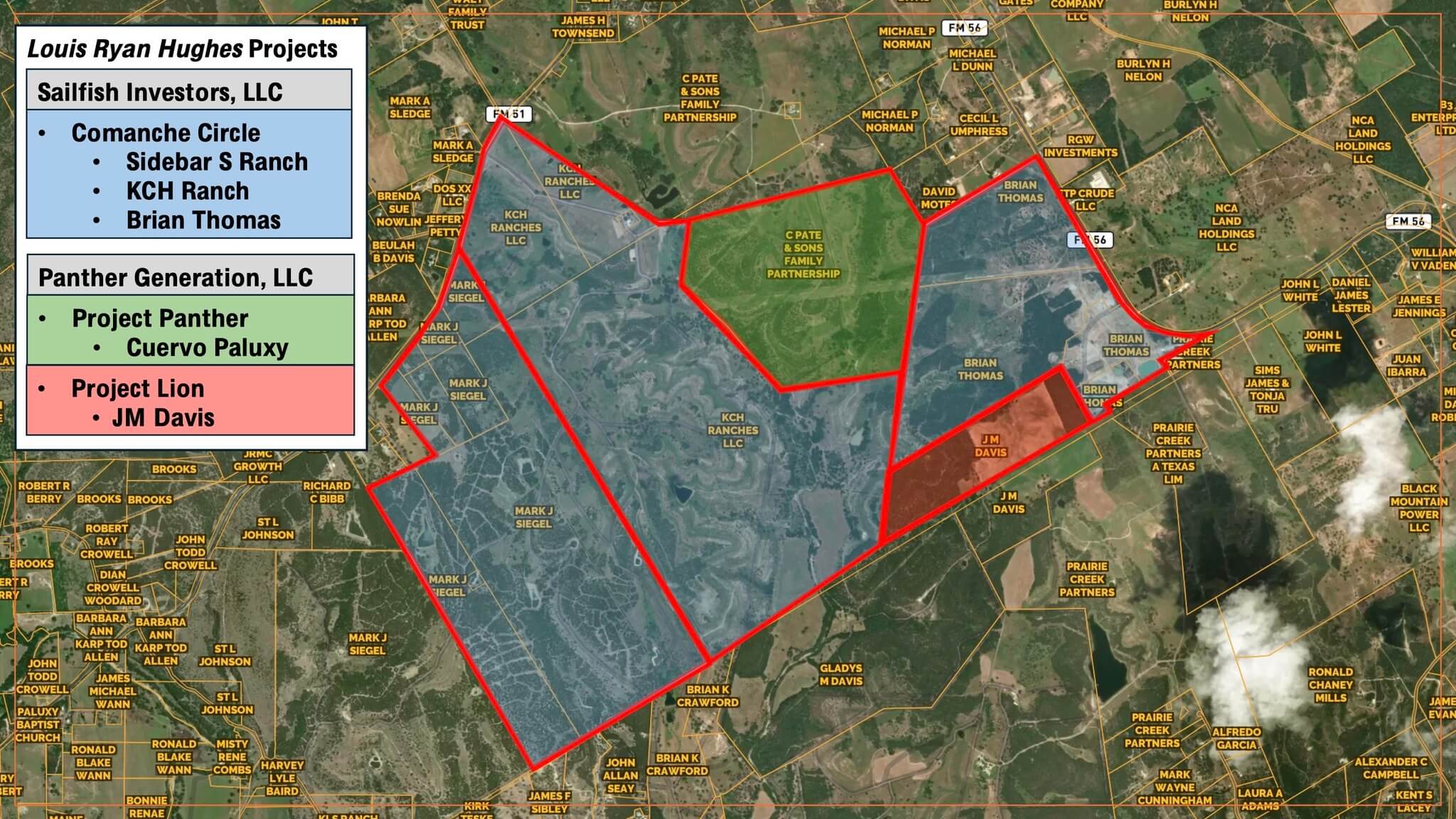
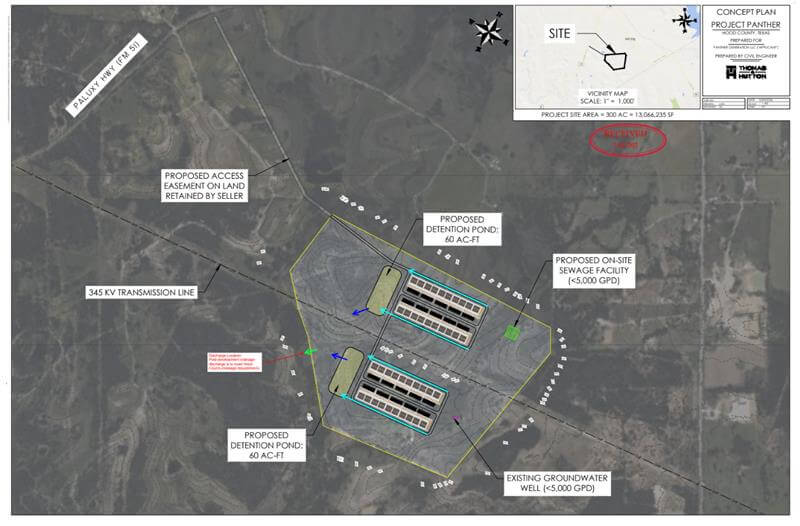
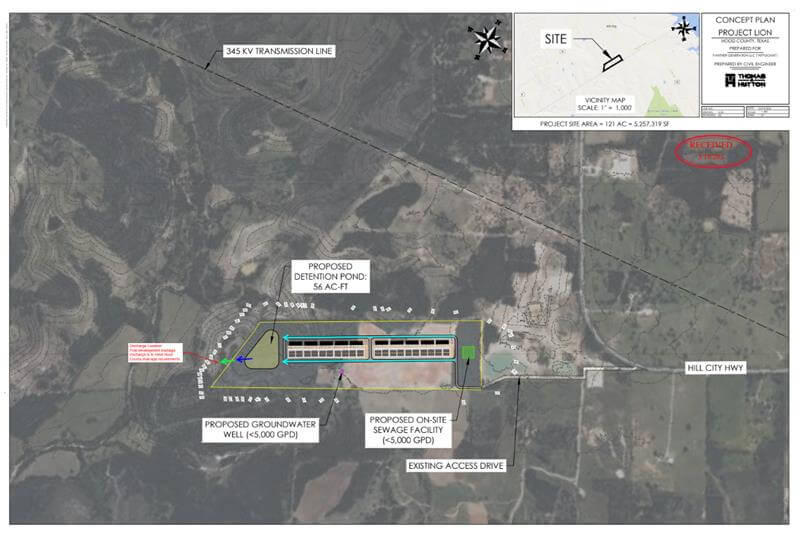
Comanche Circle
– Somervell Co, Hwy 51&56, 2100ac
– Developer: Sailfish Investors
– Pending land purchase
– 45 bldgs; 300,000sqft ea.
– 1000ac impervious cover
– Three 1.2GW CCT power plants
– ~2000 backup generators
– NRG has applied for a TCEQ air permit
– Concept Plan conditionally approved by HCCC
– No well, wastewater or drainage permits have been filed
Project Partner
– Hood Co; FM 51; 300ac
– Developer: Panther Generation, LLC
– Same as developer as Comanche Circle
– 4 Data Halls
– Utilize existing groundwater well
Project Lion
– Hood Co; FM 51; 121ac
– Developer: Panther Generation, LLC
– Same as developer as Comanche Circle
– 2 Data Halls
– Proposed groundwater well
NRG Partnership
– Sailfish Investors partnered with NRG Energy
– Tolar NRG Power Center co-located with Comanche Circle Data Center
– Planned power output: 1.2GW
– Air permit submitted with TEQ
– Additional power plants will be needed to reach 5GW
Source: https://hoodcounty.texas.gov/
Concerns
Air Pollution
– Equivalent emissions from 850,000+ cars annually
– CO2 emissions are likely over a million tons per year
– No current air quality monitoring in Somervell or Hood Counties
– NRG Tolar facility may exceed regional emission levels
Water Pollution
– All ranches are in Paluxy River watershed
– Flows into Prairie Creek and Paluxy River
– Impacts ranches including, Rock-N-Oaks, Cross & Grave, River Valley, Ringlers, Ingrams, Sibleys, Teskes, Suited Jacks Ranch
– Supplies water for livestock and seasonal streams
Noise & Light
– Constant noise including surge from backup diesel generators
– Security lighting will eliminate dark skies
Traffic
– 73 traffic fatalities on US 67 from 2013–2023 in nearby counties
– Limited road safety: no shoulders, blind curves, intersections
Source: Fort Worth Star-Telegram
Wildlife
– Golden Cheeked Warbler:
The endangered Golden Cheek Warblers have been seen, recorded, and reported on 3/29/26 on adjacent land within 100ft from the fence line.
– Black Capped Vireo endangered species
– Habitat overlaps with proposed project lands
– The Monarch butterfly a threatened species candidate has also been reported on adjacent land on 3/29/26
– Antelope Horn Milkweed in bloom, a native plant that Monarchs depend on for breeding and survival was identified/recorded on 3/29/26
– The Glen Rose Yucca, a species considered vulnerable and found in only a handful of locations in the world was on adjacent land and recorded 3/29/26
– American Bumblebee, an imperiled native bee in North America a threatened species candidate was also located on adjacent land on 3/29/26
– Approx. 1.5 miles away 8 endangered Golden Cheeked Warblers had been reported at Dinosaur Valley State Park Mid March 2026
Decline in Tourism & Property Values
– Attractions: Dinosaur Valley State Park, Dinosaur World, Creation Museum, City of Glen Rose
– RV parks, short-term rentals, and property values could be affected
Things you can do!
– Submit your comments to
TCEQ (https://www14.tceq.texas.gov/epic/eComment/)
– Request a public hearing/public case hearing
-> Points to stress to elected officials and TCEQ
– NO TAX ABATEMENTS
– WATER STUDIES
– TEQ AIR QUALITY
– FULL TRANSPARENCY
– FULL RESTITUTION
– Contact you elected officials (https://wrm.capitol.texas.gov/home)
Talking Point #1
No Tax Abatements
– Demand that government officials approve NO tax abatements for developers and tenants of data centers.
– Developers often require tax abatements to ensure their projects are financially viable for investors.
– Moreover, developers should compensate us for the negative impacts their projects will have on our property values.
Talking Point #2
Water Studies
– Demand environmental impact studies on our water quantity and quality due to the numerous planned data centers and power plants in Hood and Somervell Counties.
– These developments require large amounts of surface water and potable well water.
– DEMAND that your Water Board does not approve water access until these studies are complete!
Talking Point #3
TCEQ Air Quality
– Demand that TCEQ study the CUMULATIVE emissions burden in the area, including existing, recently approved, and future power generation plants.
– The Comanche Circle NRG Plant is trying to avoid this scrutiny.
– It is recommended that you include this request in your TCEQ comments.
Talking Point #4
Full Transparency
– Demand full transparency on the environmental study reports.
– Insist on rigorous public hearings on the various concerns and urge all local officials to end “Closed Sessions” on these topics.
– Our elected officials have been aware of these developments for months and have been meeting behind closed doors.
QUICK STEPS: Email Governor Abbott: using the link below!
Subject: SPECIAL SESSION REQUEST
https://gov.texas.gov/apps/contact-us/opinion
Letter Template:
Dear Governor Abbott,
The rapid expansion of data centers and gas-fired power plants across Texas has escalated into a crisis of resource security. While Texas remains a global energy leader, the current “AI boom” is threatening the very foundation of our state, our rural land and water sovereignty.
In Hood and Somervell Counties alone, there are nine known data center proposals, some exceeding 2,000 acres. This scale of development is unsustainable. The hydrological exhaustion caused by these facilities poses a direct threat to the groundwater our citizens depend on. What is the state’s plan for the thousands of Texans whose wells will run dry to cool these servers?
Furthermore, this industry moves in cycles. There is a high risk that in ten years, once the technology evolves, these massive facilities will be abandoned, leaving once-fertile Texas soil paved over and lost to agriculture forever. You witnessed the resilience of our legacy ranching and farming communities firsthand during your visit after the Chalk Mountain Fire. This generational land is now at risk of being permanently erased.
Our rural counties are unprepared for an industrial invasion of this magnitude and speed. We are being taken advantage of, and we need protection now.
I urge you to call an immediate special session to create legislation that protects our fertile land, groundwater, and property rights. This is a defining issue for the backbone of this state. We expect our leaders to prioritize the quality of life of Texans over the short-term demands of the AI industry.
Rural Texans are angry. This could be the issue that flips the State blue.
Respectfully,
(YOUR NAME)
Short Instructions for TCEQ Online Comment
𝘐𝘧 𝘺𝘰𝘶 𝘭𝘰𝘷𝘦 𝘵𝘩𝘦 𝘗𝘢𝘭𝘶𝘹𝘺 𝘝𝘢𝘭𝘭𝘦𝘺 𝘢𝘯𝘥 𝘦𝘷𝘦𝘳𝘺𝘵𝘩𝘪𝘯𝘨 𝘵𝘩𝘢𝘵 𝘮𝘢𝘬𝘦𝘴 𝘪𝘵 𝘴𝘱𝘦𝘤𝘪𝘢𝘭, 𝘸𝘦 𝘪𝘯𝘷𝘪𝘵𝘦 𝘺𝘰𝘶 𝘵𝘰 𝘴𝘵𝘢𝘯𝘥 𝘸𝘪𝘵𝘩 𝘶𝘴. 𝘞𝘩𝘦𝘵𝘩𝘦𝘳 𝘺𝘰𝘶 𝘢𝘳𝘦 𝘢 𝘭𝘰𝘤𝘢𝘭 𝘯𝘦𝘪𝘨𝘩𝘣𝘰𝘳 𝘰𝘳 𝘢 𝘧𝘳𝘪𝘦𝘯𝘥 𝘧𝘳𝘰𝘮 𝘢𝘧𝘢𝘳, 𝘺𝘰𝘶𝘳 𝘷𝘰𝘪𝘤𝘦 𝘮𝘢𝘵𝘵𝘦𝘳𝘴. 𝘗𝘭𝘦𝘢𝘴𝘦 𝘵𝘢𝘬𝘦 𝘢 𝘮𝘰𝘮𝘦𝘯𝘵 𝘵𝘰 𝘴𝘶𝘣𝘮𝘪𝘵 𝘢 𝘤𝘰𝘮𝘮𝘦𝘯𝘵 𝘵𝘰 𝘵𝘩𝘦 𝘛𝘊𝘌𝘘 𝘪𝘯 𝘰𝘱𝘱𝘰𝘴𝘪𝘵𝘪𝘰𝘯 𝘵𝘰 𝘵𝘩𝘪𝘴 𝘢𝘪𝘳 𝘲𝘶𝘢𝘭𝘪𝘵𝘺 𝘱𝘦𝘳𝘮𝘪𝘵. 𝘞𝘦 𝘢𝘳𝘦 𝘴𝘰 𝘨𝘳𝘢𝘵𝘦𝘧𝘶𝘭 𝘧𝘰𝘳 𝘺𝘰𝘶𝘳 𝘴𝘶𝘱𝘱𝘰𝘳𝘵 𝘪𝘯 𝘵𝘩𝘪𝘴 𝘧𝘪𝘨𝘩𝘵! 💙
𝐒𝐡𝐨𝐫𝐭 𝐈𝐧𝐬𝐭𝐫𝐮𝐜𝐭𝐢𝐨𝐧𝐬 𝐟𝐨𝐫 𝐓𝐂𝐄𝐐 𝐎𝐧𝐥𝐢𝐧𝐞 𝐂𝐨𝐦𝐦𝐞𝐧𝐭
You will repeat this process three times—once for each permit number: 181591, GHGPSDTX259, and PSDTX1680.
Step 1: Go to the Comment Portal
Click the link to open the TCEQ eComment page: https://www14.tceq.texas.gov/epic/eComment/
Step 2: Search and Select the Permit
Enter one permit number (e.g., 181591) in the search box and click Search. Click the “Comment Now” button next to the matching application.
Step 3: Fill Out the Form
Enter your full contact information (Name, Address, Phone, Email). (This information becomes public record.)
In the comment box, write your concerns. Start with the Permit Number for clarity. To request further action, you must include a clear statement:
• For a public discussion: “I request a Public Meeting.”
• For a formal hearing: “I request a Contested Case Hearing.”
Step 4: Submit
Click the Submit button and confirm receipt. Repeat Steps 2-4 for the two remaining permit numbers.
𝐓𝐞𝐦𝐩𝐥𝐚𝐭𝐞:
Formal Opposition to Air Quality Permit# (NRG Tolar Power Center) – Environmental and Hydrological Impact
To the Texas Commission on Environmental Quality (TCEQ):
I am writing to express my urgent opposition to the NRG Tolar Power Center. My objection is based on the irreversible damage this facility’s emissions and operations will cause to the delicate ecosystem of the Paluxy Valley and the water quality of the Paluxy River.
1. Acidification and Flora of the Paluxy River Basin
The proposed emissions of Nitrogen Oxides (NO_x) and Sulfur Dioxide (SO_2) are known precursors to acid rain. The Paluxy River and its tributaries support unique riparian vegetation and the ancient limestone formations of Dinosaur Valley State Park. Increased acidity in rainfall and runoff threatens the pH balance of the river, which can lead to:
• Degradation of the limestone riverbeds that preserve world-renowned dinosaur tracks.
• Harm to aquatic life, including native fish and macroinvertebrates that form the base of the local food chain.
2. Threats to Apex Predators and Endangered Species
The Paluxy Valley serves as a vital corridor for the Bald Eagle and is within the migratory and nesting range of the Golden-cheeked Warbler.
• Bioaccumulation: Particulate matter (PM2.5) and hazardous air pollutants (HAPs) do not stay in the air; they settle into the soil and water, entering the food web. For apex predators like the Bald Eagle, this poses a long-term reproductive threat.
• Habitat Fragmentation: The industrialization of this rural landscape, combined with constant noise and light pollution, will drive sensitive species away from their established nesting grounds.
3. Thermal Pollution and Water Table Integrity
While this is an air permit, the atmospheric discharge of heat and the massive water requirements for a 1.2 GW facility cannot be ignored. Any discharge or thermal runoff into the Paluxy River will lower dissolved oxygen levels, leading to potential fish kills and a loss of biodiversity in a river already stressed by Texas droughts.
4. Impact on Protected Lands (Dinosaur Valley State Park)
This facility is essentially an “industrial neighbor” to a state-protected primitive area. The TCEQ must evaluate the Cumulative Impact of these emissions on the air clarity and biological health of Dinosaur Valley. The park is not just a recreation area; it is a biological sanctuary that cannot coexist with the heavy industrial output of a massive gas-fired power plant.
I formally request that the TCEQ:
• Hold a Public Meeting in Hood County so that the community can voice their concerns in person.
• Grant a Contested Case Hearing for affected landowners and organizations like Protect The Paluxy Valley Inc.
• Perform a Comprehensive Environmental Impact Study specifically regarding the proximity to Dinosaur Valley State Park.
Alternatively, please deny this permit.
TEMPLATE LETTER FOR SHELBY SLAWSON:
Step-by-Step Submission Instructions
1. Access the Form: Go directly to Representative Slawson’s official contact page:
Texas House of Representatives https://share.google/IvEHLnyMKA3ZITuvW
2. Fill in Required Fields (Marked with ):
• Prefix/Name: Use your full legal name.
• Address: This is the most important part. Staffers often filter out messages that do not have a physical address within District 59. Ensure your Hood County address is accurate.
• Phone & Email: Use the ones where you are most likely to answer a follow-up.
3. Subject Line:
Be specific so the staff can categorize it immediately.
Recommended: “Constituent Concern: Data Center Regulation and Water Protection.”
4. Message Content:
Dear Representative Slawson,
I am writing to you as a resident of Hood County and a constituent of House District 59. I am deeply concerned by the rapid, unregulated expansion of industrial data centers and their associated gas plants in our community, specifically those threatening the Paluxy River watershed and the Upper Trinity Aquifer.
I appreciate your recent letter to the Attorney General asserting that Hood County holds regulatory authority under Local Government Code Chapter 231, Subchapter K. However, as our local Commissioners Court continues to struggle with the interpretation of this authority, the threat to our water security, air quality, and the stability of our local electrical grid remains critical.
As my representative, I am calling on you to move beyond letters and take the following legislative actions:
Special Session Advocacy: Publicly join the Hood County Commissioners’ call for Governor Abbott to convene a Special Session to establish statewide safeguards and transparent reporting for data center water and energy consumption.
Statutory Clarification: Draft and support legislation that explicitly strengthens the “Subchapter K” tools you identified, ensuring Hood County has the undisputed power to protect its watershed from industrial encroachment.
TCEQ Oversight: Intervene with the Texas Commission on Environmental Quality (TCEQ) regarding air and water discharge permits for proposed gas plants in the Paluxy Valley.
Our community is not “anti-growth,” but we are firmly against the irreversible destruction of the resources that sustain our families and our economy. We expect our representative to be our primary advocate in Austin, not a silent observer.
I look forward to a formal response from your office regarding these specific requests.
Sincerely,
[Your Name]
[Your Address]
[Your Phone Number/Email]
5. The “Response Requested” Box:
Make sure to explicitly state in your message: “I request a formal written response regarding your office’s plan to address these issues.”
48-Hour Follow-Up: If you do not receive a confirmation or a response within two business days, call her Austin office at (512) 463-0628 and say: “I submitted a formal constituent inquiry via the House website on [Date] regarding data centers. I am calling to confirm it was received and assigned to a staffer.”
Comanche Circle Data Center opposition
Ways to get involved
Use your skills and voice to help protect our land, water, and community. Together, we can create meaningful, lasting change.
Join us in the Comanche Circle Data Center opposition through coordinated community-led efforts, public outreach, educational campaigns, and dedicated advocacy. Together, we can safeguard the scenic Paluxy Valley, protect its wildlife and waterways, reduce environmental impacts, and strengthen our collective resilience against the massive development threatening our unique region.